NextPrinting highlights new ways of working
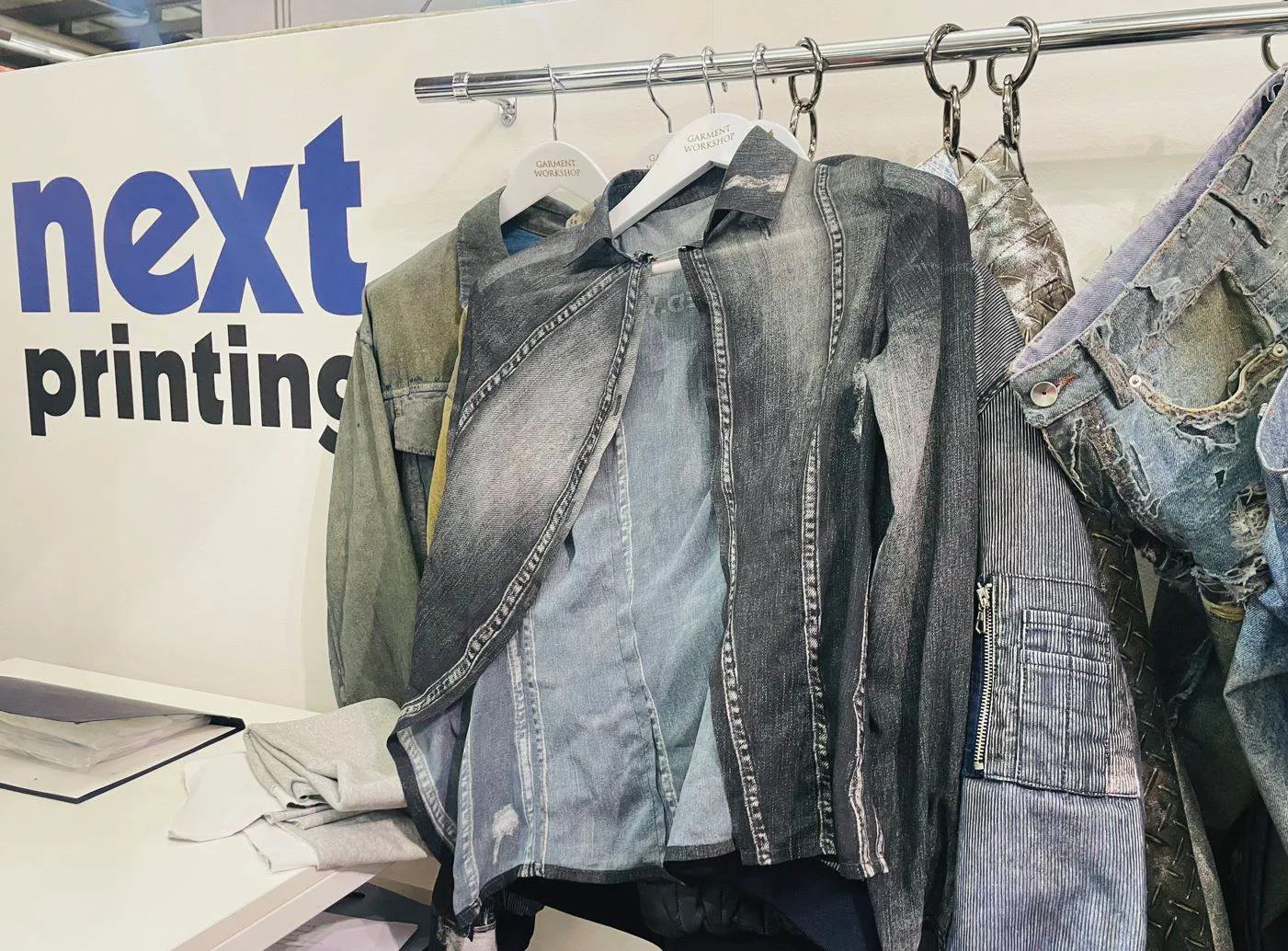
Powdered leather on denim printed to look like jackets, jeans printed on washable leather and distressed denim designs on multiple fabrics are among the latest projects from Italian company NextPrinting.
Based in Bergamo and part of the ACM accessories group, it works with customers to create unique and novel print effects and printed jeans, with a strong focus on R&D.
One new project uses leather offcuts from the accessories side of the business, which are ground into a powder by a partner company and glued onto cotton or denim. This material can then be printed with images of jeans or jackets, creating novel effects and textures. The material can also be hand-finished using scratching and distressing, partially removing the surface layer.
Another new development uses leather pieces supplied by an Italian tannery printed to look like jeans or jackets. The leather remains supple and is also washable.
The company has been developing its printing techniques since 2019, and sees a growing demand. Advantages include a reduction of the water, chemicals and energy needed to create standard distressed denim looks – although the jeans might then be washed to soften after cut-and-sew.
Another benefit is the flexibility, project manager Philippe Mignot told us. Once the patterns and sizes have been approved by the brands, the garments can be printed on demand, he explained. “This makes it flexible and creates less waste.”
Echoing Adriano Goldmchmeid’s comments that digitally printed denim is not intended to replace traditional denim but rather add a new avenue for the sector, Mr Mignot suggested brands that have overstocks of fabric can send them to be printed to change the look. This also makes ordering more reactive to the market, he suggested, as well as offering adjustability in terms of design and colour.
While digital printing is growing, it is important that there is the know-how behind it and not simply the machinery, he added. “Our technicians know how to print on different fibres and fabrics, and it can be complex to work out the shrinkage, for example. This is what makes us stand out – we have a very skilled team."
NextPrinting can print three metre-wide fabric at around 700 to 900 metres per hour, equating to around 4,000 to 5,000 metres per day.