Denim mills blend with high-end textile-makers at Milano Unica

27/01/2026
Denim mills blend with high-end textile-makers at Milano Unica

The 42nd Milano Unica has concluded in Milan (January 20-22), reporting a 25% increase in European exhibitors.

Although mostly high-end European wool and cotton mills, Italian denim mill Berto, Portugal’s Troficolor and Spain’s Textil Santanderina were in attendance, with other mills also showing small denim collections as part of their offerings.

In the Japanese section, first-time exhibitor Chugoku presented its own indigo piece dyeing machine and fabrics produced using the bassen method (using a ‘reduction reaction’ to discharge the indigo). It is owned by Sanyo Senko.

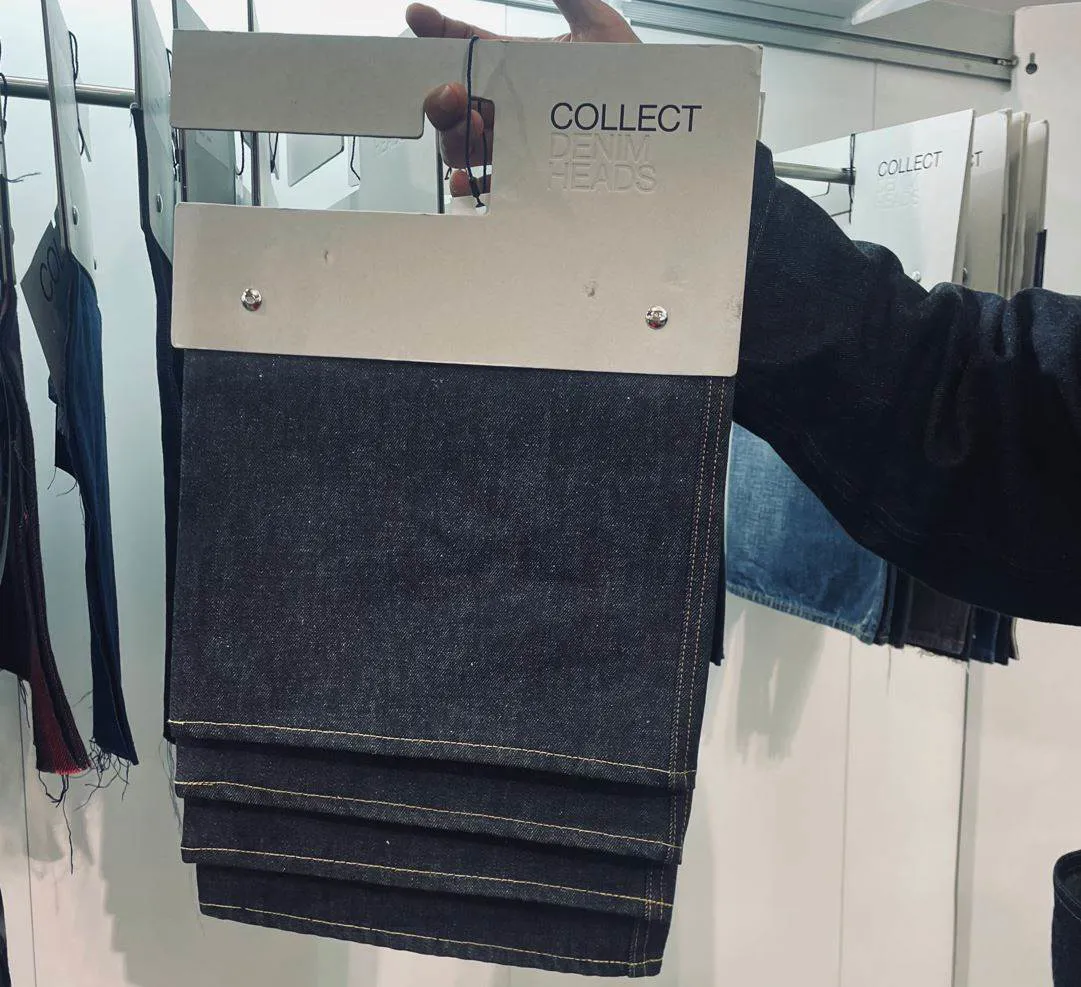
Japan Blue and Collect showed selvedge and non-selvedge options, as well as workwear and casualwear ranges. They told us that stocks of selvedge are hard to come by at the moment. “All the mills have very little stock, so we have been making interesting fabrics without selvedge,” including fabrics with reactive dyes, and fabrics that shrink less. “Most people associate Japanese denim with selvedge, but we make high-quality non-selvedge fabrics too.” 

It was the denim company's second year showing at the fair as part of the Japanese contingent, which had been supported by the government and the Japan Textiles Association. The section’s organisers told us its companies were keen to increase exports to Europe due to the “ultra-weak yen”. 

Companies also highlighted the provenance of Bishu wool. The confluence of three rivers in Bishu provides water and clean hydro-energy to wash raw wool fibre and power the textile mills.

Miyuki Keori showed a 100% “denim wool” in a pair of jeans, which would keep their high-end feel and dressy look, explained export manager Masayuki Gomi. Developed three years ago, it is currently the company’s best-selling fabric, popular with customers in Japan, the US and Australia. “Demand for this wool denim is exploding,” he said. “We weave our fabrics with a special machine. The one we use is from Schönherr in Germany – it is no longer made, so if it breaks, we won’t be able to fix it.”

For its selvedge fabrics, the company sends its yarns to Kojima, but he reiterated that this could be difficult now. Customers wanting to achieve the look in a selvedge fabric would have to wait one year, he said – such is the demand for the selvedge looms at his partner’s factory. 

Other exhibitors in the Japanese section included protein-derived fibre maker Spiber, which previously has supplied its fibre to be blended into denims for Pangaia and Goldwin. It is currently investigating expanding into using the material as a replacement for leather, or membranes for jackets, and is researching how to move its feedstock from sugar cane in Thailand to agricultural waste and, eventually, textiles waste. It also has a partnership with ADM, with the aim of creating a new production stream to the US.